Changing culture begins with understanding.
The Healing Culture Framework™ is the approach that guides The Camel Project's work to prevent harm, support healing, strengthen relationships, and create healthier communities.
The framework recognizes that harmful behavior rarely exists in isolation. What people experience, how they respond, and the environments around them can all influence what happens next.
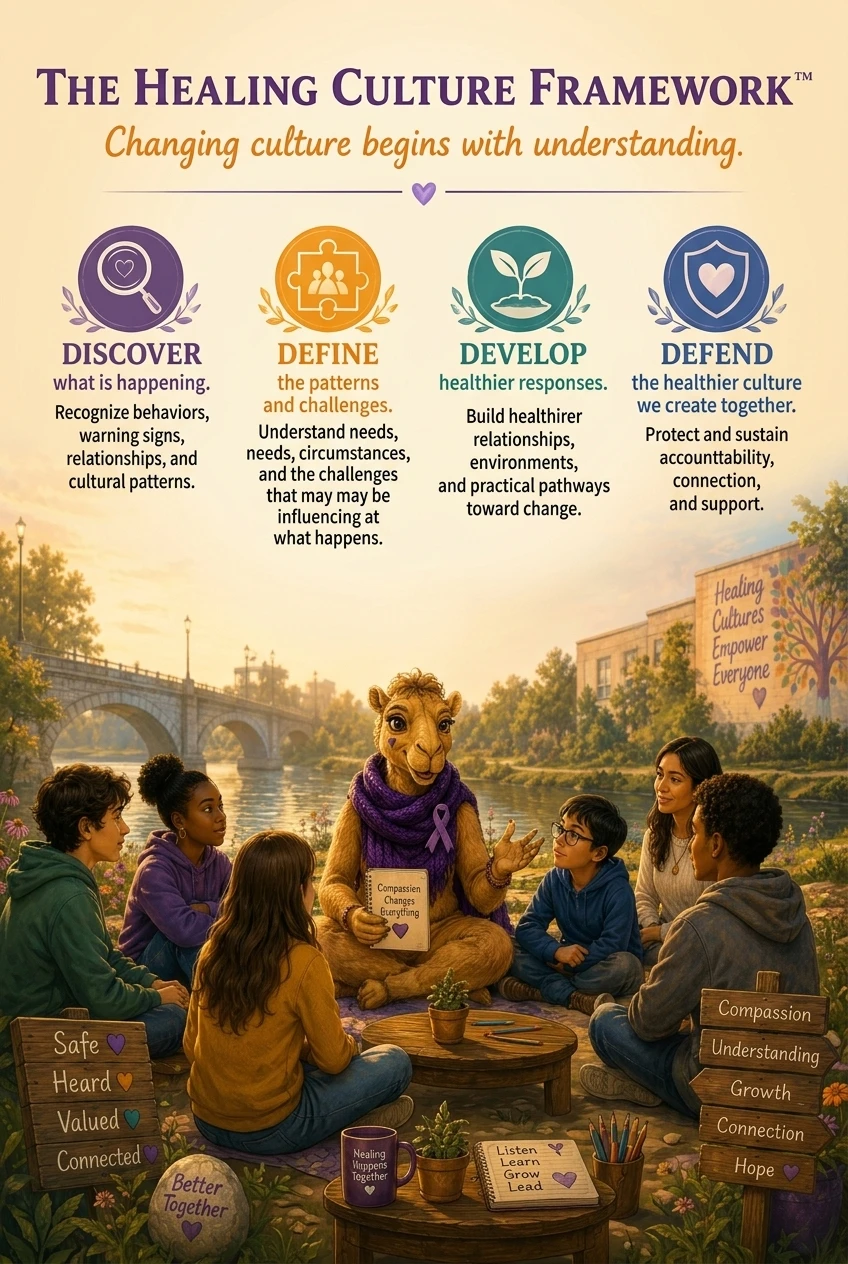
Instead of simply reacting to behavior after something has gone wrong, the Healing Culture Framework™ encourages people and communities to understand what is happening, recognize patterns, develop healthier responses, and protect the healthier culture they are creating.
From Reaction to Understanding
When people respond only to the behavior they can immediately see, they may miss the circumstances, experiences, relationships, or patterns underneath it. Understanding does not mean excusing harmful behavior or avoiding accountability. It means developing enough awareness to respond intentionally rather than simply reacting.
A healing culture asks a different question: What is this behavior telling us? That question can create an opportunity to see what is happening beneath the surface and identify where prevention, support, intervention, or change may be possible.
Healing and Prevention Are Connected
Prevention is not only about stopping something from happening. It is also about creating the conditions that make healthier choices, relationships, and responses possible.
People who have experienced bullying, abuse, trauma, conflict, isolation, or other harmful environments may need opportunities to feel heard, supported, and connected.
Healing can therefore be part of prevention. When people have healthier ways to understand and respond to what they have experienced, they have an opportunity to change the direction of the next chapter rather than continuing the same harmful cycle.
Compassion and Accountability
A healing culture does not mean ignoring harmful behavior, minimizing its impact, or avoiding difficult conversations.
Healing requires honesty. It requires recognizing harm, understanding its impact, taking responsibility, and developing healthier ways of responding.
Compassion and accountability can exist together.
We don't fix broken people because we don't believe people are broken.
From Framework to Action
The Healing Culture Framework™ provides the foundation for the work carried out through Operation Safe Lives.
The framework informs The Camel Project's programs, educational work, community support, intervention efforts, and community activities.
Each program may approach a different need or audience, but the underlying purpose remains connected: help people recognize what is happening, understand its impact, develop healthier responses, and protect the culture they are building together.
One Purpose. Many Pathways.
Operation Safe Lives brings the work together under one overarching purpose: changing the conditions that can lead toward harm while creating environments where people can heal, connect, learn, and thrive.
The Healing Culture Framework™ provides the pathway for doing that work.
Healed people heal people.
Let's Change the Culture Together
Whether you are looking for training, prevention resources, community support, or ways to strengthen the culture within your organization, The Camel Project would like to hear from you.
Contact The Camel Project